Menswear · Shopify · Meta Ads · Custom apps
Hussars
Selling made-to-measure tailoring online, without losing the fitting room.
- Client
- Hussars
- Sector
- Menswear · Ready-to-wear + bespoke
- Market
- Spain & EU
- Role
- E-commerce & growth lead (embedded)
- Timeline
- Sep 2025 – 2026
- Scope
- Shopify · Custom apps · Meta Ads · Klaviyo · Reporting
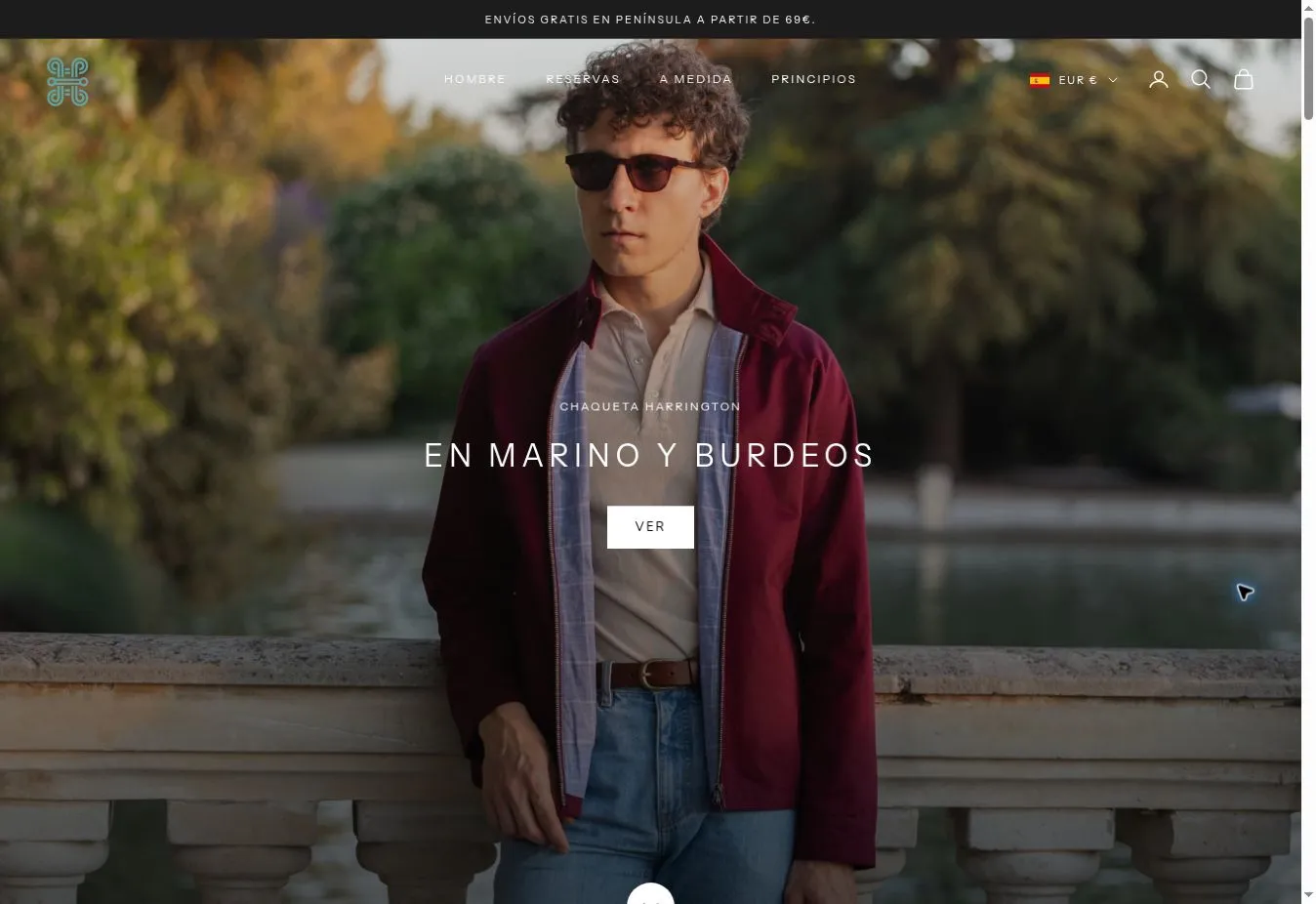
Hussars makes heritage-inspired menswear: ready-to-wear jackets and a made-to-measure service. I joined to run the whole digital side: the Shopify store, the bespoke funnel, acquisition on Meta, email in Klaviyo, and the internal tools that keep the numbers honest.
Two businesses under one roof. Ready-to-wear needs a fast, confident checkout; bespoke needs trust, education and an appointment. The store treated both the same, sizing questions flooded the inbox, ad spend was one big campaign, and reporting meant exporting CSVs every Monday morning.
Split the journeys, then connect the data. Each path got its own landing, its own campaigns and its own emails, plus one reporting layer that reads them all.
A bespoke funnel that answers “how much?” first
I designed and built the made-to-measure landing as a story with a clear exit: craft → process → fabrics → price → appointment. Interviews with the tailor showed the #1 reason people didn’t book was price uncertainty, so the page tells you before you ask.
The estimator lets visitors combine garment, fabric, lining and construction and see a live price range. It qualifies leads before the call and turns a vague “contact us” into a specific, confident booking.
- 9 garments × 5 fabrics × 5 linings × 2 constructions
- Prices stored in metaobjects, editable without code
- Booking pre-filled with the chosen configuration
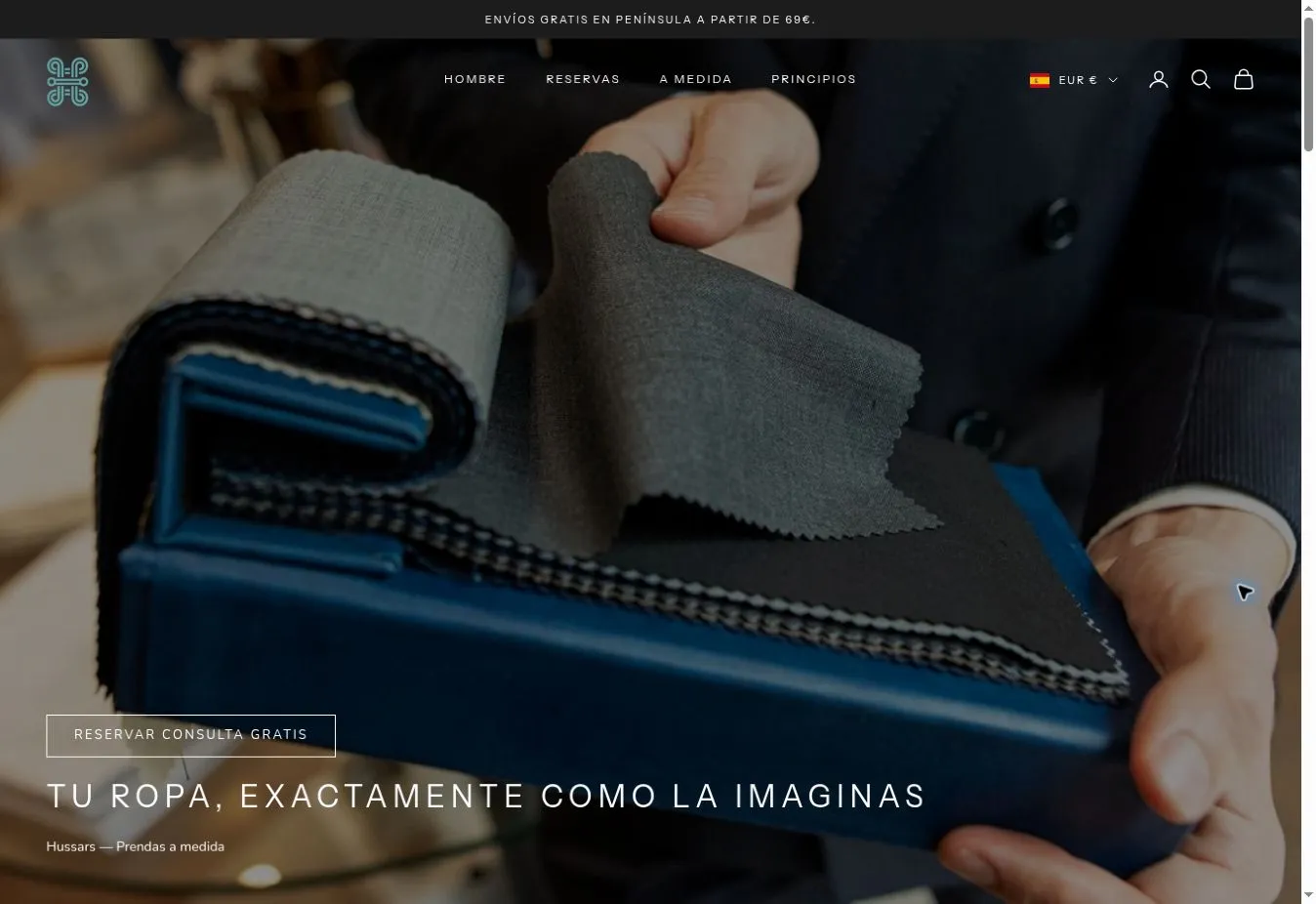
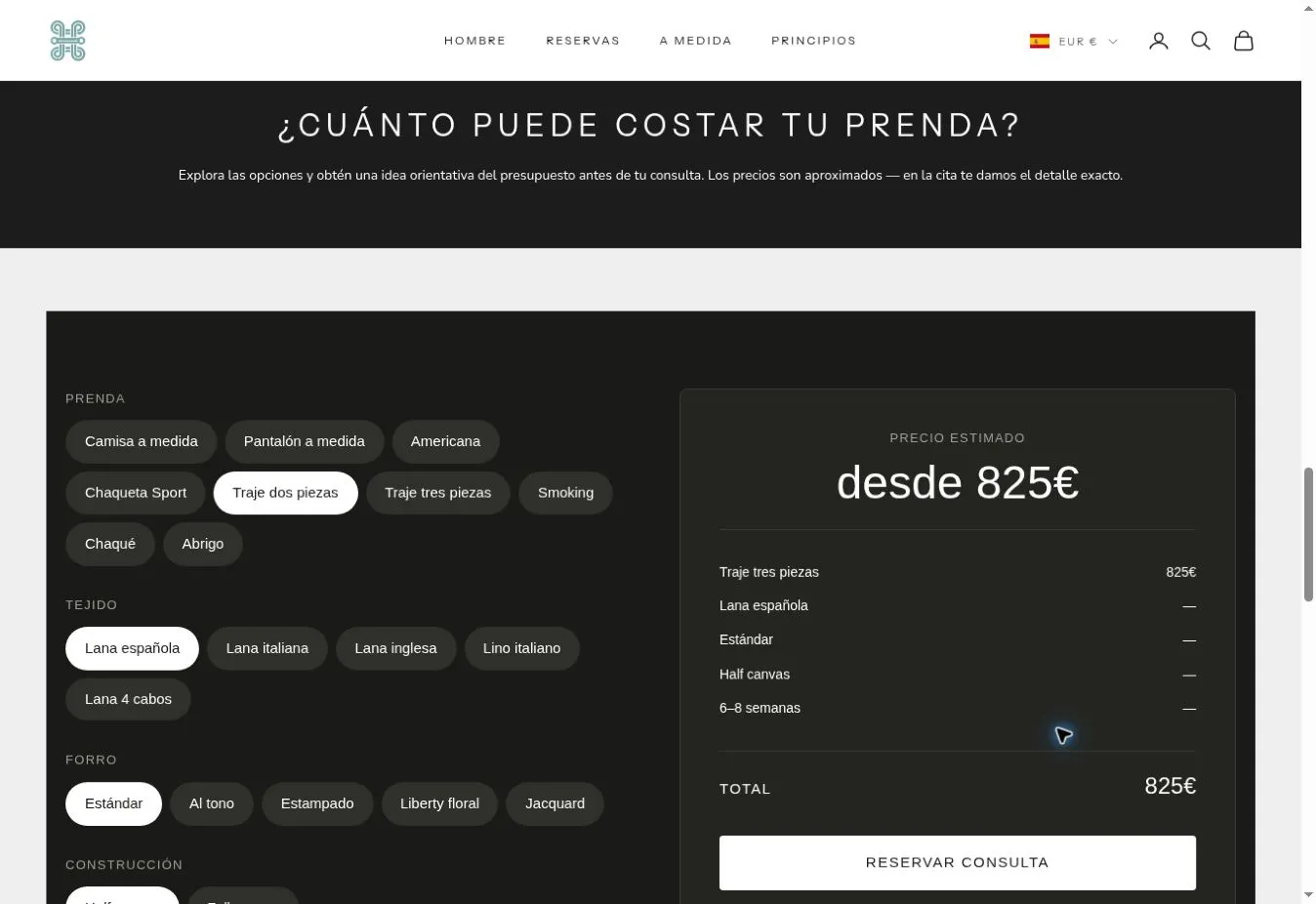
- 1One action: a free consultation
- 2The promise, in the customer’s words
- 3Garment first: the biggest price driver
- 4Fabrics named by origin, not by code
- 5“From” price: an anchor, not a quote
- 6Booking inherits the configuration
The store itself
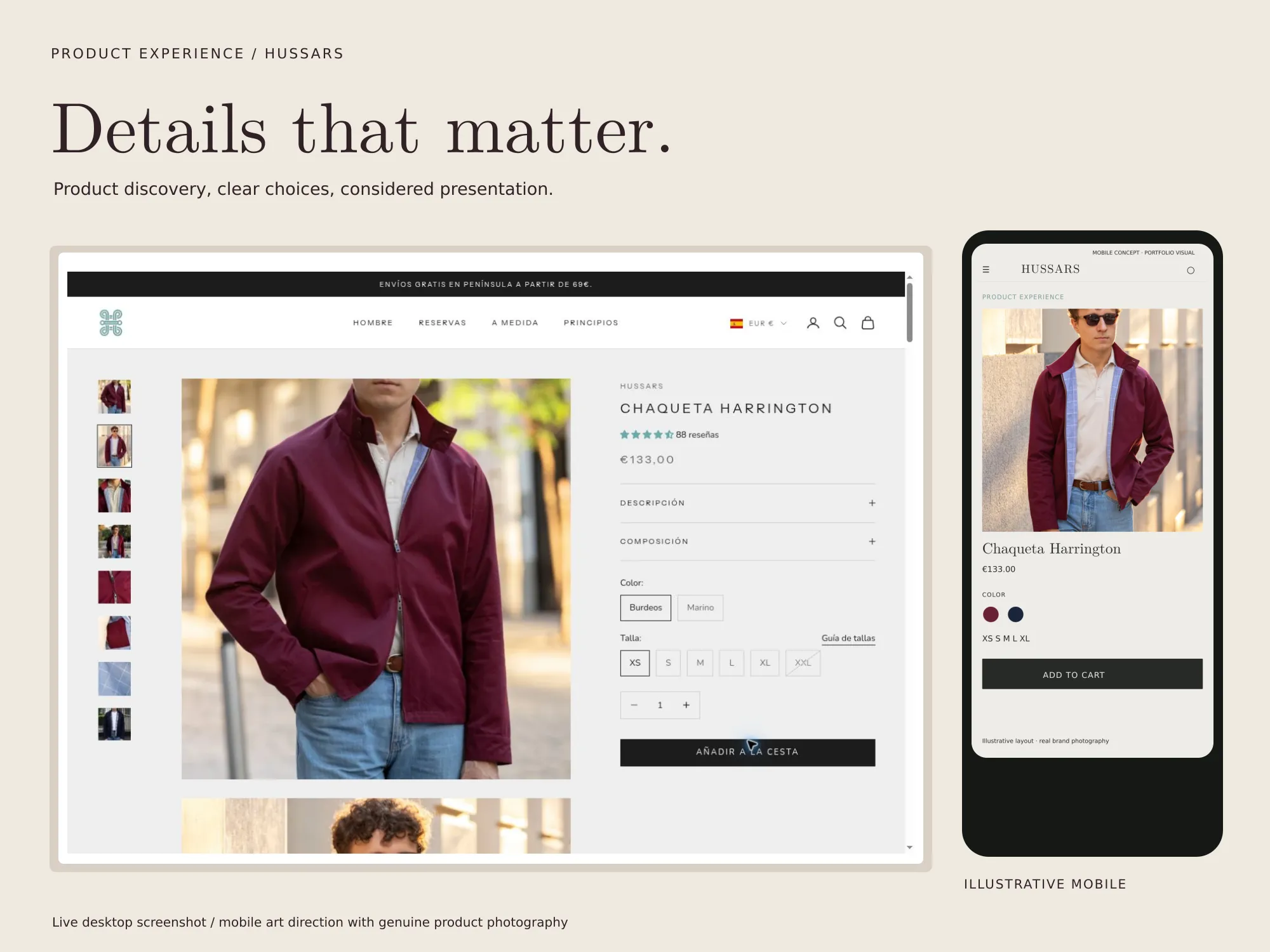
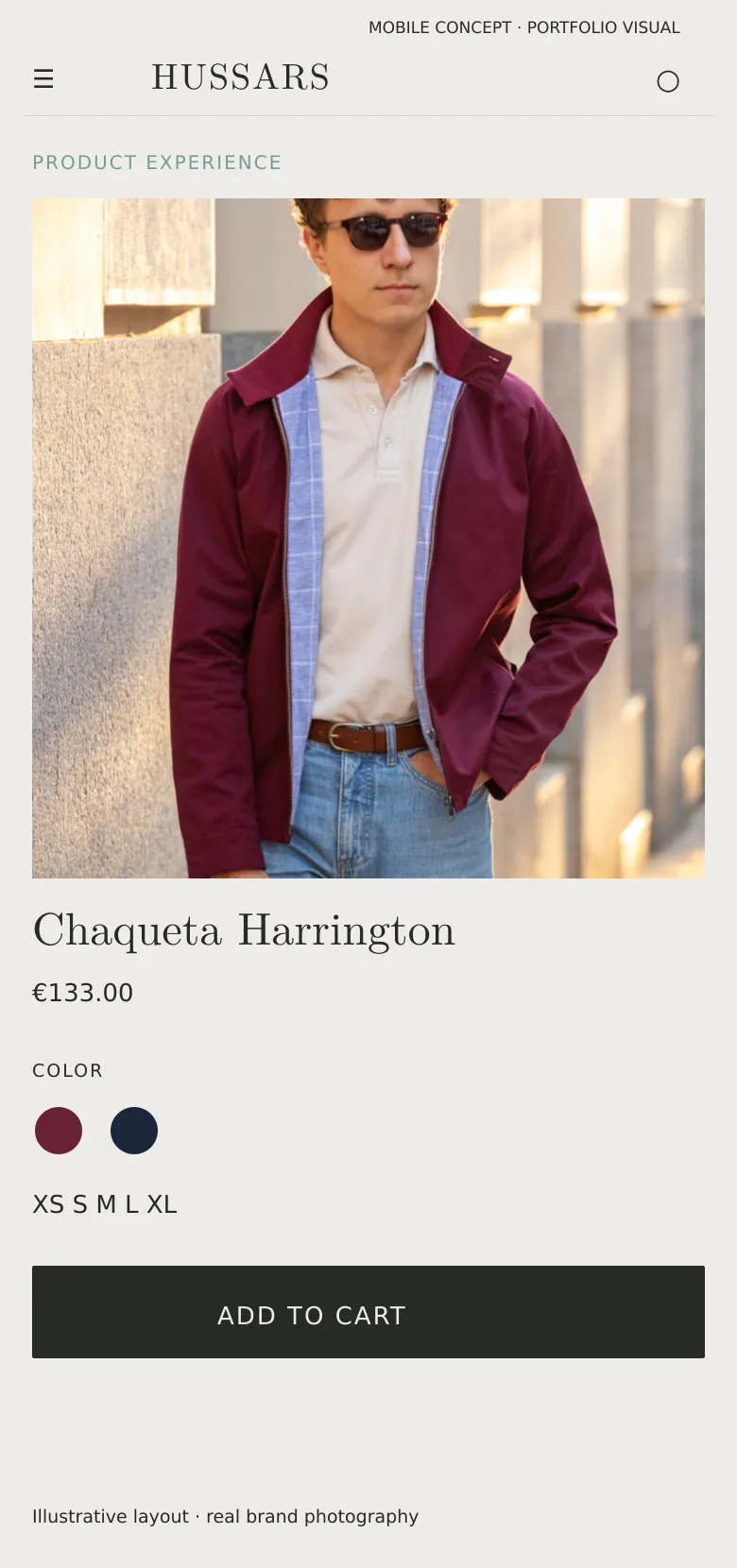
Behind the visible work: catalog and variant clean-up, markets and languages, checkout and payment methods, shipping rules, and a product page that puts fit, fabric and care where people look for them.
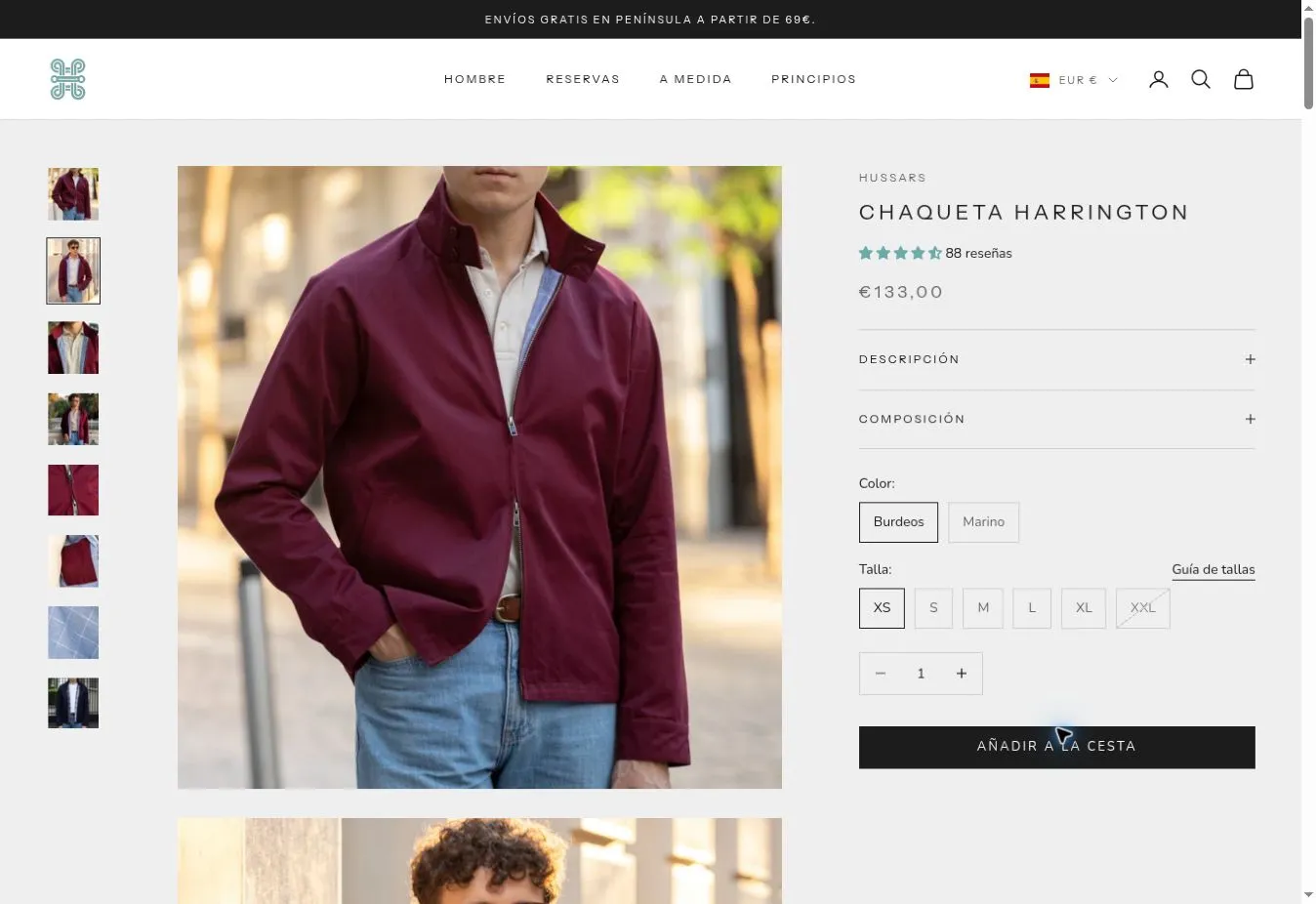
- 1Spaced capitals, like a tailor’s label
- 2Colors named in words, not only dots
- 3Size guide next to the sizes
- 4One dark, full-width action
The system behind the screens
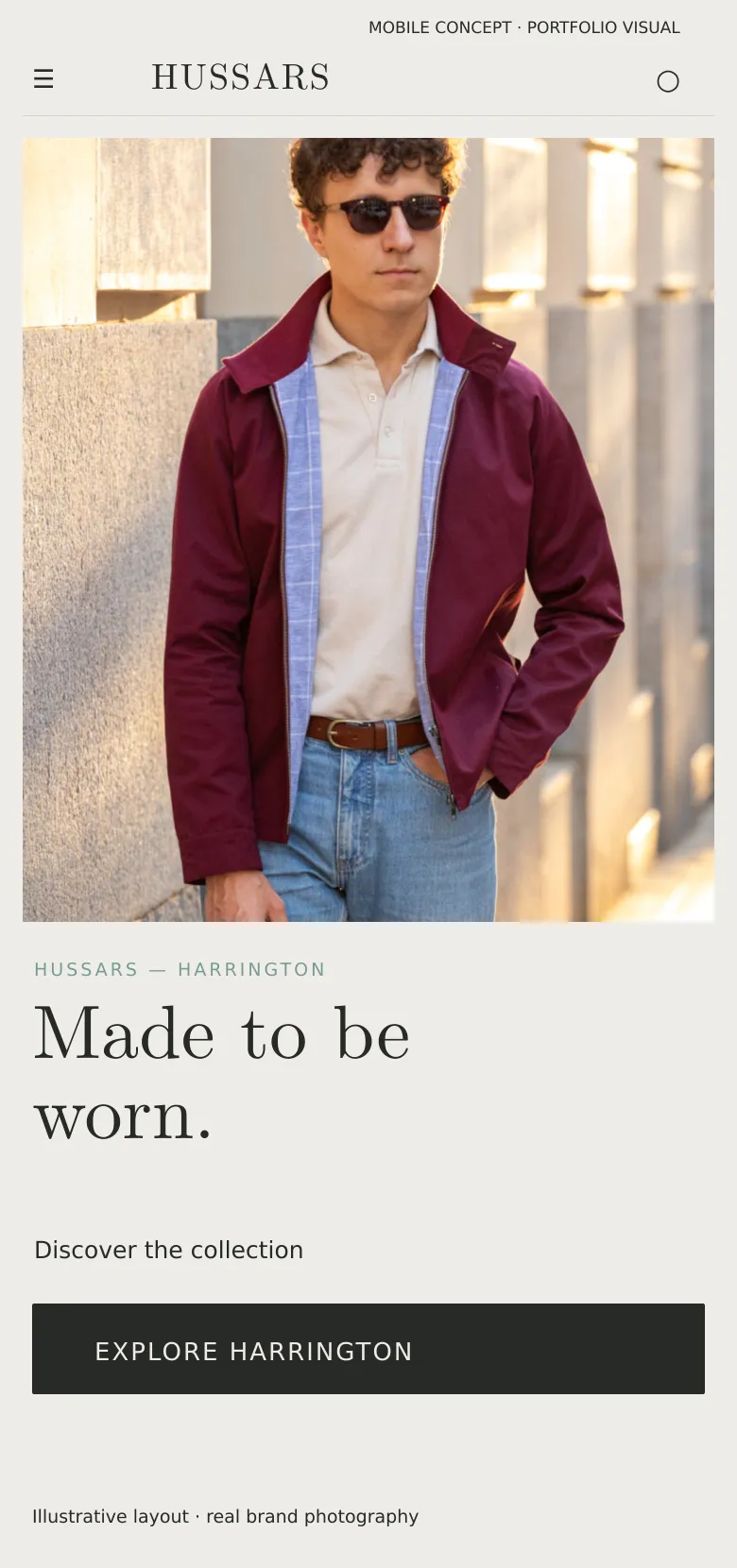
A heritage menswear label selling online has to feel like a tailor’s shop, not a fast-fashion feed. Every choice below follows one rule: let the cloth be the color, and let the interface behave like a well-cut jacket: quiet, structured, exact.
Color
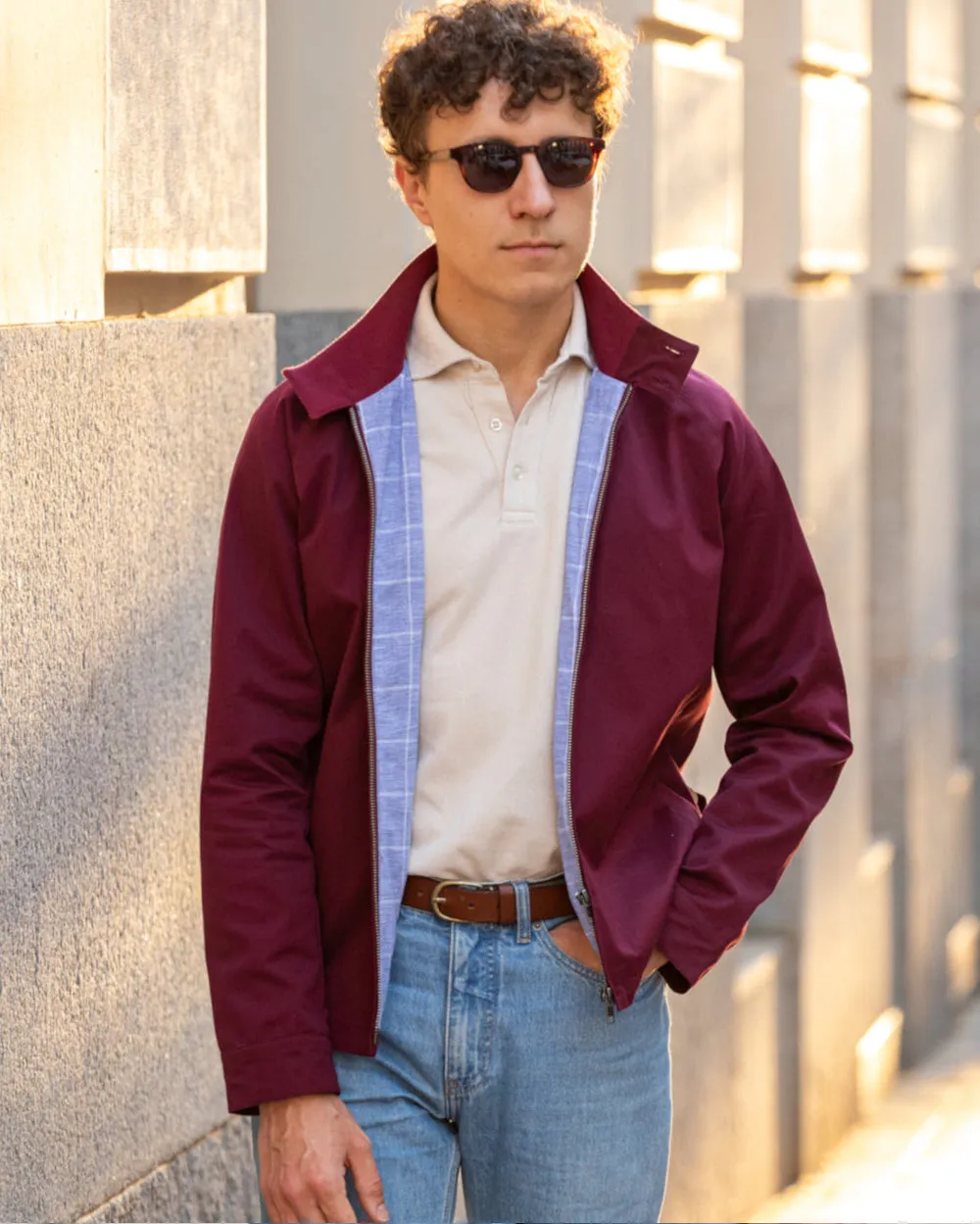
Almost no UI color. The burgundy and navy come from the garments in the photography; the teal monogram is the only brand accent, so it always reads as a signature.
Typography
Chaqueta Harrington
Headings · product namesWide-tracked capitals echo the woven labels inside a jacket.
Lana española, forro al tono, half canvas.
Body · descriptions · pricesRounded and warm for long fabric and care descriptions at 14 px.
Grid & spacing
- Columns
- 12
- Max width
- 1440px
- Gutter
- 24px
- Base unit
- 8px
8-point spacing on a 12-column grid. The product image takes 7 columns, the buying column 5. Never 50/50, so the garment always wins.
Decisions, and why
-
01
Price estimator before the booking form
WhyInterviews showed price uncertainty was the #1 reason not to book a fitting.
Instead of
A “contact us for a quote” form that hides the number. -
02
Fit finder inline, next to the sizes
WhyPeople decide size at the size selector, so help belongs exactly there.
Instead of
A size chart in a modal nobody opens. -
03
Monochrome UI, colorful garments
WhyBurgundy and navy jackets look truer next to neutral chrome.
Instead of
A brand color on every button competing with the product. -
04
Separate journeys for ready-to-wear and bespoke
WhyOne buys in minutes, the other needs trust and an appointment.
Instead of
One generic store template for both.
Schema
- Bespoke landing & price estimator
- Fit finder app block
- Meta account architecture
- Klaviyo flow suite
- Automated reporting pipeline
- Ongoing store operations
- Test the fit finder above the fold vs. inside the size selector.
- Add a post-purchase survey to calibrate attribution beyond the pixel.
- Open EU markets with localized pricing and duties included.